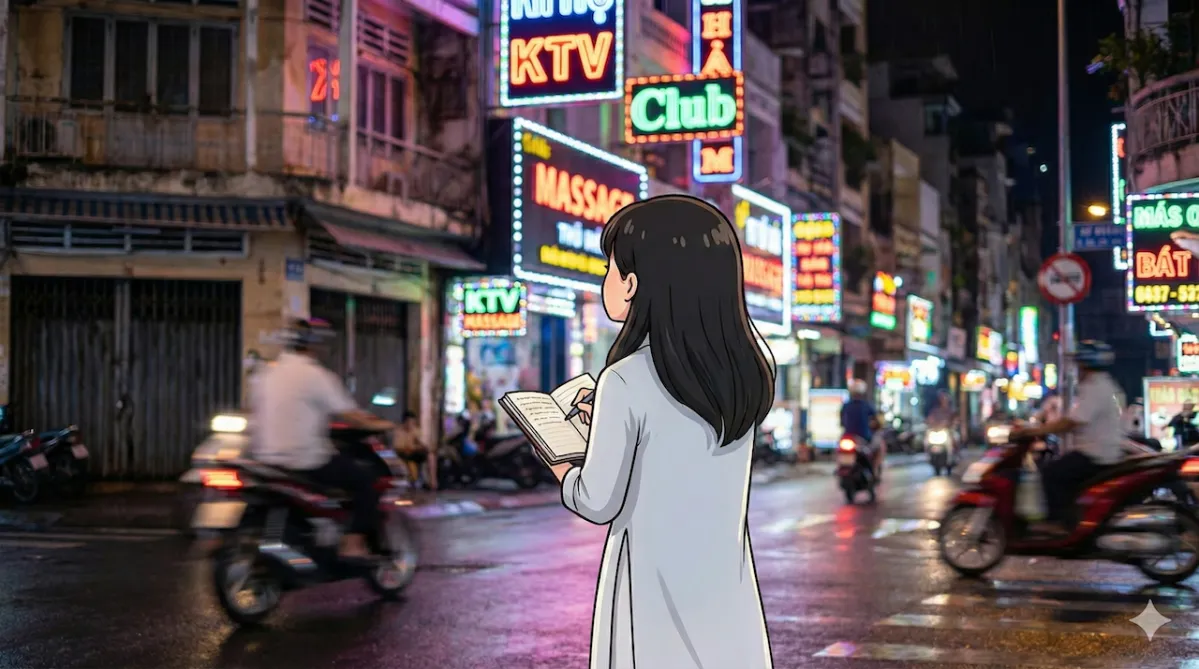
Introduction: The Day is History, the Night is Legend
Vietnam, a narrow country, has created distinctly different cultural personalities in the north and south. This is not only reflected in language and cuisine but also profoundly in the ecology of nightlife.
For travelers looking to delve into Vietnam's "subculture," Ho Chi Minh City (Saigon) is a battlefield of "blooming flowers"; while Hanoi (the capital) may have a hidden local industry, the "foreign enclaves" are another brightly lit scene. This article will take you through the legendary "Dragon Palace" of Ho Chi Minh and the trending "Vietnamese Head Wash," as well as the hidden "Japanese-Korean District" in Hanoi, and will reveal the latest 2025 budget, terminology, and digital scam tactics.
Chapter 1: South Vietnam "Saigon" — Only More Splendid, No Limits
Ho Chi Minh City (HCMC) is the economic center of Vietnam, where nightlife emphasizes "liveliness" and "grandeur," with a dizzying variety of options.
1. The Legendary "Dragon Palace": Ho Chi Minh's Top KTV
In the past, forums suggested that "Dragon Palace" could refer to different places, but as times have changed, the true "palace-level" experiences are mostly concentrated in Ho Chi Minh City.
- Visual Shock: The top KTV (Karaoke Om) here is extravagantly decorated. Upon entering the lobby, you'll see a three-story crystal chandelier, golden dragon and phoenix carvings, and even a grand staircase reminiscent of a European palace.
- Selection Culture: In such high-end establishments, the lineup is quite impressive. The manager (Mama) may bring in dozens of staff members for you to choose from. This is the so-called "selection of concubines" feeling, which is the most iconic experience of Ho Chi Minh's nightlife.
2. Internet Sensation: Vietnamese Head Wash (Gội Đầu) and Barbershops
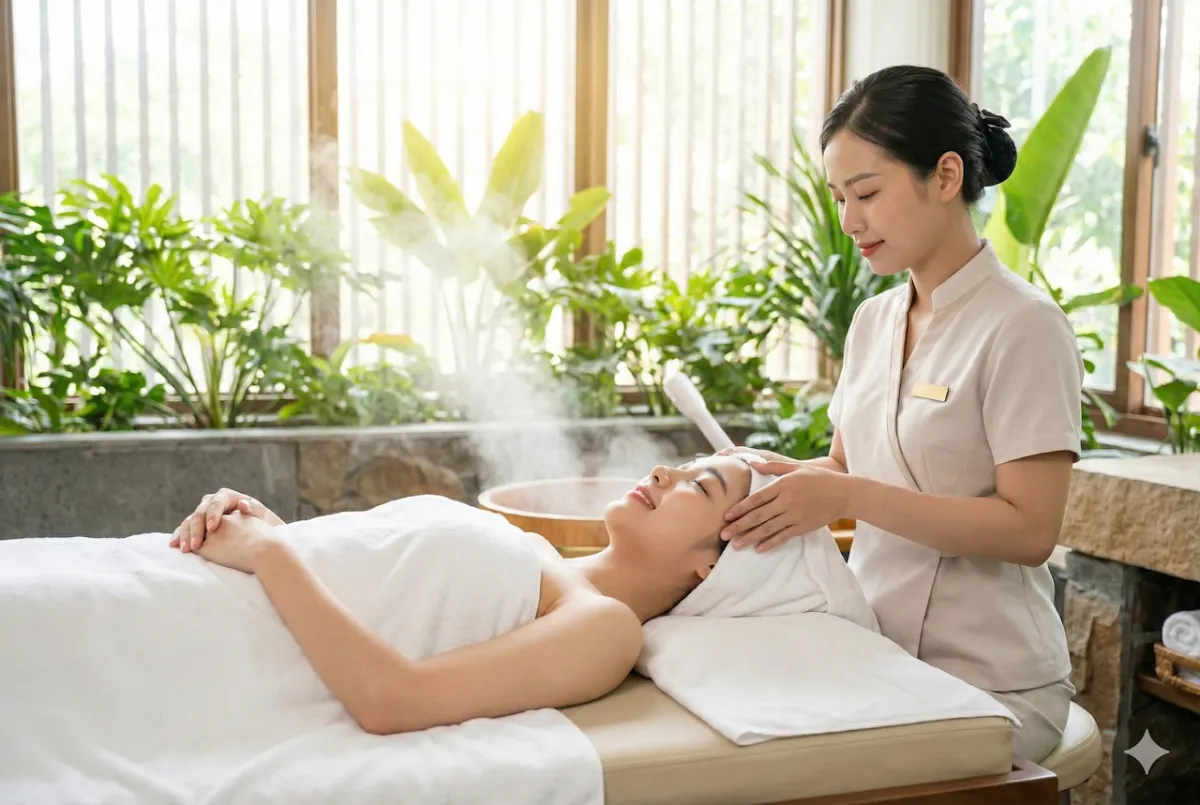
In the past year or two, the hottest keyword in Vietnam has definitely been "Vietnamese Head Wash."
- Imperial-Level Enjoyment: An authentic Vietnamese head wash includes face washing, cucumber masks, ear cleaning, trimming fingernails and toenails, full-body massages, and even back walking. The service lasts from 90 minutes to 120 minutes, with charges typically between 300,000 - 500,000 VND, offering great value for money.
- How to Distinguish "Pure" from "Impure": If a barbershop (Hớt Tóc) has neon lights and the staff are wearing matching short skirt uniforms with no visible barber tools, it usually falls into the gray area of providing "special services."
3. A Must for Beginners: Cherry (櫻桃) Famous Store
If Dragon Palace is the high-end scene, then Cherry (櫻桃) is what many Taiwanese veterans refer to as the "beginner's village" or "must-pass exam."
- Features: This place emphasizes "SOP standardized processes." Unlike roadside black shops that randomly shout prices, here you have a clear price list and sauna (Sauna) facilities.
- Suitable Audience: For travelers who are afraid of being overcharged or want a "stable safety card," Cherry is the safest starting point on the Ho Chi Minh nightlife map.
4. "Half-Sugar" Culture in the Japanese Area
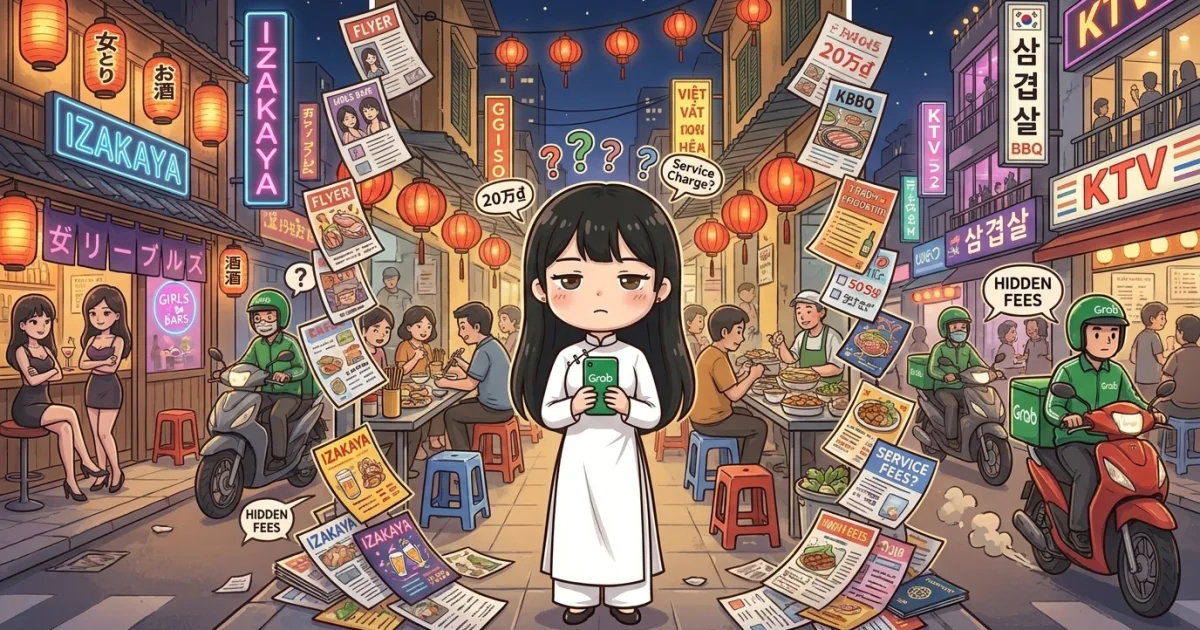
Located in District 1, Lê Thánh Tôn (黎聖宗街) alley area retains a strong Showa-era Japanese atmosphere. The streets are lined with Counter Bars, suitable for gentlemen looking to find girls who speak foreign languages (English/Japanese/Chinese) to enjoy a drink and a flirtatious atmosphere (No Touch).
Chapter 2: North Vietnam "Hanoi" — Local Invisibility, Foreign Areas "Internationalization"
The nightlife in Hanoi presents an extreme "M-shaped" pattern: local low-end fast food has been wiped out, but high-end consumption targeting expatriate business clients is exceptionally hot.
1. The End of Local Legends: Trần Duy Hưng Road Has No Fast Food
If you still want to find fast food (Tàu Nhanh) on the streets of Hanoi for a few hundred Taiwanese dollars, you will definitely be disappointed.
- Completely Invisible: With the capital's crackdown, Trần Duy Hưng Road (Trần Duy Hưng) has turned into a commercial area. Local activities have moved underground (High-end Private Club), and without a local guide, you won't be able to enter.
2. Hanoi's "Japanese Street": Kim Mã and Linh Lang
Although Hanoi is not as famous as Lê Thánh Tôn Street, it actually has a large-scale Japanese expatriate community concentrated in Kim Mã (金馬路) and Linh Lang (靈郎路).
- Ecology: This area is home to a large number of Girls Bars and Japanese KTVs (Karaoke J-Pop). Similar to Ho Chi Minh, the service style here is Japanese, with a clientele mostly consisting of Japanese business people.
- Features: The girls here usually have high quality, strong foreign language skills (fluent in Japanese), and a more dignified demeanor.
3. Hanoi's "Korean Town": Mỹ Đình (美亭)
Located in the Mỹ Đình (美亭) and Trung Hòa Nhân Chính area, this is the largest Korean settlement in all of Vietnam.
- Ecology: This is the base for Korean-style KTVs. The experience is closer to Taiwanese style, with many drinking games and a very lively atmosphere. However, since the menu and signs are mostly in Korean, communication can be difficult without a guide.
Chapter 3: [Terminology Encyclopedia] Essential Codes for Veterans in Vietnam
If you want to play in Vietnam like an insider, you must understand these key terms, especially the first word, which can help you quickly identify the nature of the establishment:
- Ôm (Hug): The Most Important Keyword
- Meaning: In Vietnamese, it means "to hug." If this word appears in signs or conversations, it indicates that this place offers companionship with the opposite sex/table service.
- Karaoke Ôm: Commonly known as "Hug KTV." This is completely different from regular singing Karaoke Gia Đình (Family KTV). Walking into an "Ôm" establishment means you are ready to choose someone and tip.
- Cà phê Ôm / Bia Ôm: Hug coffee / Hug beer, usually refers to places where someone accompanies you for drinks, chats, or even more intimate interactions.
- Tay Vịn (Armrest): This is a euphemistic term for KTV table staff. It means that a man, when drunk, needs an "armrest" to lean on.
- Massage Khỏe vs. Massage Mệt:
- Khỏe (Healthy): This refers to regular acupressure massage and foot massage.
- Mệt (Tired): Literally means tired, but in slang refers to "services that will leave you very tired" after completion.
- Tiền Bo (Tip): The Vietnamese word for tip, which is the most important expense in entertainment venues.
Chapter 4: [Consumption Strategy] 2025 Budget Reference and Unwritten Rules for Tipping
This is the most frequently asked question: "Should I tip in Vietnam?" There is a significant cultural difference here, so please be sure to clarify:
1. Daily Life vs. Entertainment Venues
- Daily Life (No Tips): Vietnam is not a tipping country. You do not need to give extra tips when eating pho at a street stall, drinking coffee, taking a taxi, or dining in a regular restaurant.
- Entertainment Venues (Must Tip): However! If you enter an massage parlor, KTV, nightclub, etc., tipping is **"an unwritten rule."** This is because the service staff in these industries have very low base salaries and rely entirely on tips (Tiền Bo) for their livelihood.
2. Tipping (Tip) Market Reference
- Massage (Massage): The unwritten rule is "Tip ≥ Entrance Fee." For example, if the entrance fee is 500,000 VND, the tip is usually at least 500,000. Some establishments will directly write this on the bill (Tip Included), so please check carefully before settling the bill.
- KTV (Tay Vịn): Calculated based on "table fees (TC)," the market rate is about 500,000 - 1,000,000 / per service staff / per time (or per hour). This does not include the manager (Mama)'s tip.
Chapter 5: Comprehensive Guide to Digital Scams — Zalo, WeChat, and Tinder
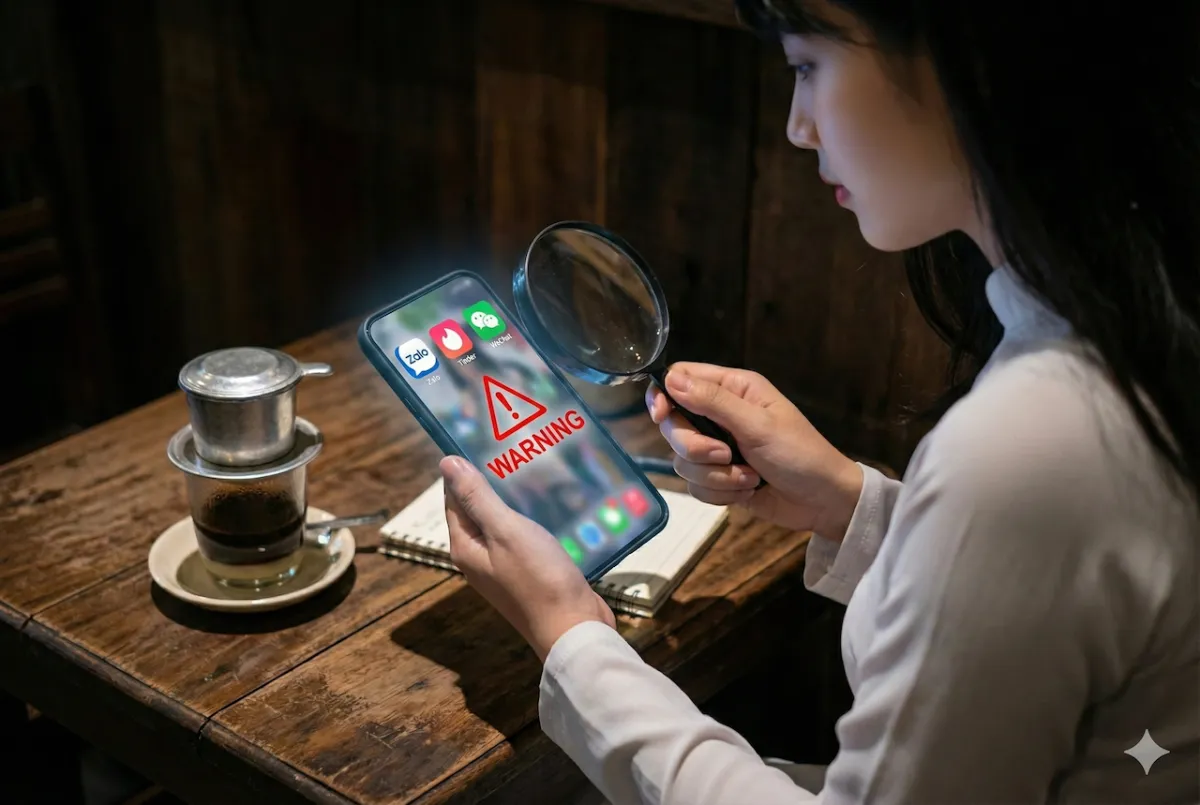
As physical stores face regulations and smartphones become widespread, many transactions have shifted to "digital." However, this is also a hotbed for scams.
1. "Photo Scams" and "Deposits" on Zalo and Telegram
- Tactics: Scammers use stolen photos of beautiful women to offer low prices. When you want to make an appointment, the other party will ask for a deposit of 500,000 - 1,000,000 VND, citing "fear of police sting" or "reserving time."
- Iron Rule: If you hear "pay a deposit first (Deposit/Cọc)," it is definitely a scam.
2. WeChat (People Nearby): Targeting Chinese-speaking Tourists
- Trap: Local Vietnamese rarely use WeChat. If you open "People Nearby" and see a bunch of beautiful/handsome individuals using simplified or traditional Chinese actively adding you, 99% are scammers or pimps targeting Chinese speakers.
- Risk: They specifically target Taiwanese or Chinese tourists who have just landed and are unfamiliar with the area, luring you to unsafe establishments for high spending.
3. Tinder (Dating App): Notorious "Bar Scams"
- Tactics: You match with a beautiful woman on Tinder, and after a few sentences, she enthusiastically invites you: "Let's go for a drink!"
- Bar Scams (Booking Bar Scams): She will take you to a "bar of her choosing." You think it's a romantic encounter, but when the bill comes, you find out you've ordered a bunch of expensive drinks, with the bill easily reaching 10 to 20 million VND. If you refuse to pay, the bouncers at the door won't let you leave.
- Defense: If you decide to meet, you must choose the location and absolutely avoid going to unfamiliar bars or clubs specified by the other party.
4. Ultimate Advice for Beginners
If it's your first time in Vietnam and you're unfamiliar with the area, never "wander around based on feelings."
- Do Your Homework: Refer to TikTok, YouTube, or professional forums for store reports.
- Find a Reputable Guide: If you're worried about language barriers leading to scams or are hesitant to enter all-foreign-language establishments, "finding a professional guide/local companion" is the safest way. Although it may incur additional service fees, it can help filter out bad establishments, resolve disputes, and provide a "safety insurance."
Conclusion: Know Your Limits, Safety First
The nightlife in Vietnam is enchanting and vibrant, featuring the opulence of Ho Chi Minh, the imperial enjoyment of Vietnamese head washes, and the exotic charm of the Japanese-Korean enclaves in Hanoi.
But remember, "safety" is always the highest guiding principle. Whether you are exploring on your own or being guided by professionals, please be sure to comply with local laws, respect service staff, and keep your finances discreet, so you can enjoy this vibrant scene and return safely.
Disclaimer: The content of this article is solely for observing Vietnamese travel culture and sharing anti-scam information, aimed at providing travelers with safety knowledge. This platform strictly prohibits any facilitation of illegal transactions and does not encourage travelers to violate local laws. Travelers must respect themselves and comply with Vietnamese regulations.