What is eSIM?
In this digital age where everyone is glued to their smartphones and feels anxious without internet access, eSIM (embedded SIM card) is undoubtedly one of the greatest inventions in human history. It doesn't have a physical card, and you don't have to poke a small hole on the side of your phone with a pin, allowing you to avoid the drama of "losing your Taiwan SIM card" when traveling abroad. Simply put, it's a digital SIM card that exists deep within your phone's soul, enabling you to go online and post updates anytime, anywhere. Not only does it save you the hassle of carrying multiple cards, but it also allows for instant switching between telecom providers, making it a blessing for lazy people.
Why choose eSIM?
First of all, you no longer have to carry a bunch of cards like a smuggler when traveling abroad. Just a few taps to purchase a plan, and you can activate it the moment you land at your destination. The best part is you don’t have to stand in the sun waiting in line to buy a physical card; it can be done in just a few minutes. Based on my painful experiences, having a stable internet speed is crucial, especially in a bustling country like Vietnam where crossing the street feels like a life-or-death situation. When the internet is smooth, your mood becomes beautiful!
Traditional SIM card vs eSIM
- Traditional SIM card: The advantage is that you can buy them anywhere on the street, but the downside is that you have to be very careful when changing cards, fearing that the tiny card the size of a fingernail might fall into a gutter, leaving you disconnected.
- eSIM: Making a stylish entrance! No plugging or swapping cards, one phone does it all. The downside... is that some very old phones do not support it. However, times are changing, and phones that don’t support eSIM are becoming as rare as those that still require antennas to make calls!
How to choose a Vietnam eSIM on the market? Editor's painful trial and error
Honestly, if the entire article just keeps promoting the same company, smart readers will roll their eyes and think, "This must be a paid promotion!"
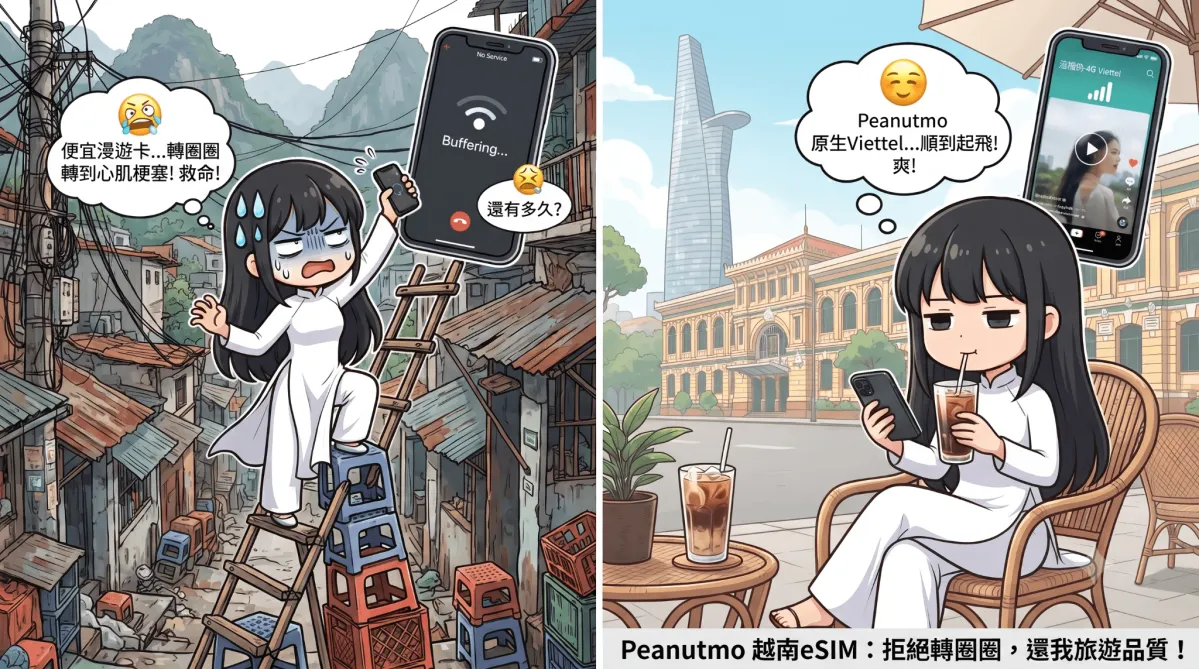
To help everyone avoid unnecessary detours, I decided to share my past experiences in Vietnam, where I spent money to learn lessons and even got so frustrated I wanted to throw my phone. The eSIMs available in Vietnam can generally be divided into two major categories: "Cheap but infuriating roaming options" and "Stable native direct connection options." Let's directly discuss a few common experiences:
1. International brands / Cheap roaming types (e.g., Airalo, white-label roaming cards bought casually on Klook)
- Operating principle: It actually roams through telecom providers in Hong Kong or Singapore and redirects back to Vietnam.
- Real experience: Prices are usually very attractive, around a hundred dollars. But the downside is "high latency."
- Editor's thoughts: I used to buy it cheaply, and while standing at the intersection in District 1 of Ho Chi Minh City trying to call Grab, the blue dot on the map got stuck and wouldn’t move. When the driver called to ask where I was, I couldn’t even load a webpage. That feeling of panic is something I never want to experience again. If you just need to receive occasional messages, it’s fine, but if you want to navigate smoothly or livestream, it will drive you crazy.
2. Local second-tier telecoms or virtual operators (MVNO)
- Operating principle: Renting local second-tier networks or plans with fluctuating signals.
- Real experience: Signal reception is average in suburban areas or inside hotels, but once it’s peak hours in the afternoon when schools let out or people get off work, the base stations get overwhelmed, and the internet speed crashes from 4G to 2G.
- Editor's thoughts: Prices are moderate, but the signal is like the moon, different on the first and fifteenth days. Often, when I want to reply to something urgent in a café, I end up waiting until my coffee gets cold.
3. Local three major telecom native cards (mainly Viettel and Vinaphone)
- Operating principle: Directly connects to the local signals of the largest telecom providers.
- Real experience: Stable! Just one word, stable.
- Editor's thoughts: Honestly, whether in the ancient alleys of Hanoi or at the beach in Da Nang, the signal has almost no dead spots. Although the price is usually a few dozen Taiwan dollars more than those super cheap roaming cards, what you get is the privilege of "using it whenever you want without waiting on the roadside like a race car driver for a webpage."
- A personal little complaint: There are actually some brands specifically for traveling in Vietnam, but after using them, like Peanutmo, which directly provides you with the best quality Viettel native plan, after a while, you really get spoiled and can’t go back to those cheap roaming cards.
How to purchase and install eSIM?
Buying eSIM is so simple that even the elderly on the street can do it:
- Go to the Peanutmo website to order your preferred plan.
- You will instantly receive an email with a QR code.
- Open your phone settings to scan it, press a few buttons, and you’re done!
💡 Editor's friendly reminder: Be sure to install in a Wi-Fi environment (like at home in Taiwan before departure or at the airport Wi-Fi). If you scan while roaming on the road, the data fees will make you want to cry! Also, make sure your phone system is updated to the latest version to avoid bugs.
Precautions for using eSIM
- Check phone compatibility: Take out your phone and check; don’t buy it only to find out you have an antique!
- Install in a Wi-Fi environment: Again, to save money, please install under Wi-Fi!
- Always carry a power bank: Having internet access all the time is great, but phones do drain battery quickly. If you don’t want your phone to become a brick, remember to charge your power bank before heading out.
Frequently Asked Questions
- Q: Does eSIM have data limits? A: Of course, it does! It depends on which plan you buy. Choosing data is like going to an all-you-can-eat restaurant; be mindful of your limits, don’t overstuff yourself or starve!
- Q: How do I check if my eSIM is functioning properly? A: Check if there’s a signal in the upper right corner of your phone. If the webpage won’t load, the simplest and most straightforward method is: restart your phone! It works every time.
Editor's frustrating (no, really) usage experience
As someone who can't live without the internet, being abroad without it feels like climbing a mountain. Since I started using Peanutmo's eSIM, my "internet anxiety" has been cured. Last time I went to Vietnam, I was sitting in a seemingly crumbling artsy café in a small alley, yet I could seamlessly connect to the boss's urgent calls. It was truly a comforting experience. Whether for business trips or leisurely travel, this stable connection quality is a world-saving level experience!
Conclusion and Recommendations
In summary, if your trip to Vietnam is just for vacation, and you’re not in a hurry to post photos or if you’re a bit lost, then buying a cheap roaming card will suffice. But if you’re like me, going for business meetings, needing to take calls from your boss at any moment, or if every second counts and you don’t want to waste time waiting for "buffering," spend a few extra bucks on a native IoT line (like the Viettel native card from Peanutmo), which will definitely save you half the cost of high blood pressure medication for your Vietnam trip!
Order Peanutmo Vietnam eSIM now:
👉 Click here to grab it now: https://www.peanutmo.com/zh-TW/products/vn-001
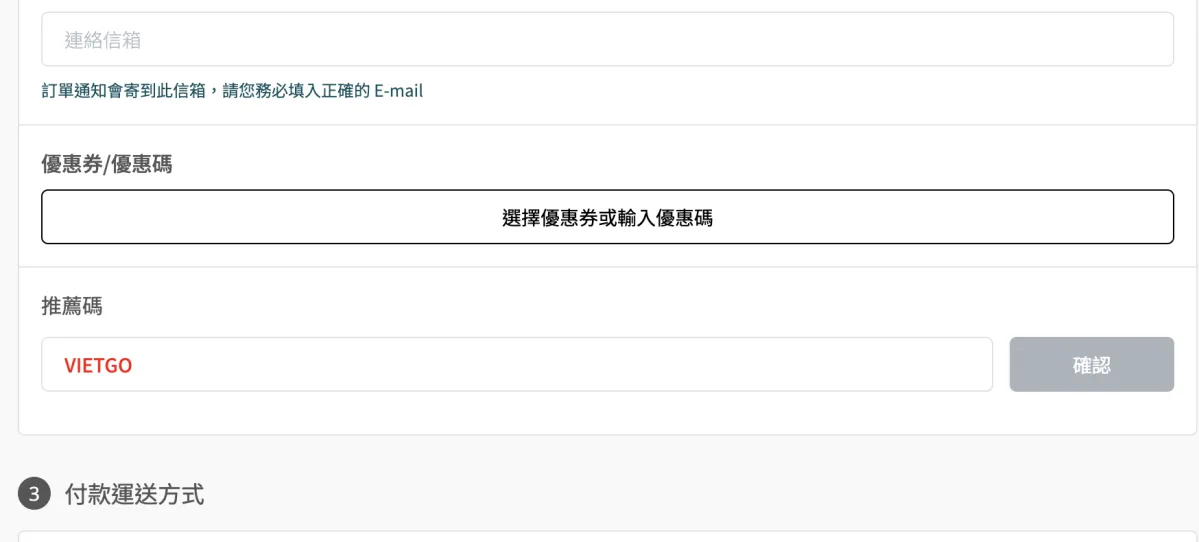
Remember to enter the exclusive recommendation code VIETGO at checkout, which gives you a 5% discount! The money saved is just enough for a couple more cups of Vietnamese coffee on the street!
Before departure, remember to choose the right plan, keep an eye on your data, and the rest is to head to Vietnam with a joyful heart (and a full internet connection) to enjoy Vietnamese pho and coffee!
![[2026 Latest] How to Choose a Massage in Vietnam for the First Time? Locals Teach You How to Avoid Tourist Traps, Spend Wisely, and Enjoy a More Comfortable Experience!](https://cdn.viet-go.com/public/articles/images/1784002251-6a55b6cbd58fe.webp)

![[2026 Latest] Must-See for Traveling to Vietnam: Complete Guide to PAI Entry Declaration at Hanoi Noi Bai Airport (Including Important Notes)](https://cdn.viet-go.com/public/articles/images/1780995368-6a27d528902d2.webp)