Detailed Content
A Unique Imperial Tomb: Immerse Yourself in the Royal Luxury Art of East-West Fusion
Upon first stepping into the Tomb of Khai Dinh, located in the outskirts of Hue, many travelers are filled with wonder—this royal tomb, situated on the slopes of Chau Chu Mountain, is unlike the traditional Nguyen Dynasty tombs that are serene, solemn, and expansive. Instead, it stands as a massive structure exuding dark gray Gothic and Baroque vibes atop a series of ascending stone steps. If you ask the editors at VietGo about the most visually stunning spot for a free trip to Hue, the answer is undoubtedly the "Tomb of Khai Dinh" (Lăng Khải Định, also known as Ung Tomb). Here, you won't find the heaviness of Chinese Qing Dynasty tombs or the traditional wooden palaces of Vietnam; rather, it resembles a finely crafted royal artwork. Today, follow the editor's footsteps to uncover the luxurious aesthetic palace crafted over eleven years by the last emperor!
Attraction Introduction and Historical Background
The Tomb of Khai Dinh is the final resting place of the 12th emperor of the Nguyen Dynasty—Emperor Khai Dinh (Khải Định, 1885–1925). He ascended to the throne in 1916 and was deeply influenced by French colonial culture during his reign, developing a strong interest in Western modern architecture and decorative arts. In 1920, he ordered the construction of his tomb, which was completed in 1931 after his death, taking a total of 11 years.
The Tomb of Khai Dinh was inscribed as part of the Complex of Hué Monuments by UNESCO in 1993. [UNESCO]
UNESCO World Heritage Centre: Complex of Hué Monuments ↗
Compared to the serene poetry of the Tomb of Tu Duc (Lăng Tự Đức) or the strict feng shui layout of the Tomb of Minh Mang (Lăng Minh Mạng), the Tomb of Khai Dinh, while the smallest of the main Nguyen Dynasty tombs (approximately 117 meters long and 48.5 meters wide), boasts unparalleled craftsmanship and expensive materials. Historical records indicate that to raise the substantial funds for its construction, Emperor Khai Dinh even requested a 30% increase in land tax from the French government, which sparked considerable public discontent and controversy at the time. However, from the perspective of architectural art, the Tomb of Khai Dinh is undoubtedly the ultimate crystallization of the collision and fusion of Eastern and Western cultures in early 20th century Vietnam.
Main Features of the Tomb of Khai Dinh and Four Key Highlights
The Tomb of Khai Dinh is built into the mountainside, with its overall structure divided into five main platforms, totaling 127 steps. As you enter the complex, you can explore upwards along the stone steps, admiring the unique architectural artistry of each area:
1. Tam Quan Gate and the Thirty-Two Steps of Entrance (Cổng Tam Quan)
Upon arriving at the tomb entrance, the first thing that catches your eye is the Tam Quan Gate made of cement and lime. Before passing through the gatehouse, travelers must first ascend 37 steep steps. On either side of the gatehouse stand exquisite cement dragon sculptures that blend Hindu and traditional Vietnamese architectural elements, showcasing a grand and imposing royal entrance.
2. Court of the Mandarins and the Stone Statues of Civil and Military Officials (Sân Bái Đính)
Climbing another 29 steps brings you to the expansive "Court of the Mandarins" (Sân Bái Đính). Flanking the court are life-sized stone statues of civil and military officials, guards, warhorses, and stone elephants. All these statues are carved from stone, with each figure's demeanor, expression, clothing patterns, and even the ceremonial staff or weapons they hold being intricately realistic. In the center of the court stands an octagonal stele pavilion, housing the "Sacred Virtue and Divine Achievement Stele" established by Emperor Bao Dai for his father, weighing approximately 10 tons and detailing Emperor Khai Dinh's life and achievements.
3. Thien Dinh Palace: The Ultimate Luxury of Porcelain and Glass Mosaic Art (Cung Thiên Định)
Ascending to the highest fifth platform, you reach the core and most exquisite building of the Tomb of Khai Dinh—the "Thien Dinh Palace" (Cung Thiên Định). The exterior of the palace is painted a stable dark gray, resembling Western Gothic churches and castles from a distance; however, stepping inside the main hall will take your breath away! The walls, columns, and ceilings of the hall are adorned with a vast amount of colorful porcelain, ceramic dish fragments, and various colored glass imported from China and Japan, meticulously cut and inlaid by Vietnam's top craftsmen of the time into complex three-dimensional designs of two dragons seizing pearls, seasonal flowers, eight treasures, and court story murals. The ceiling of the main hall features a large mural titled "Nine Dragons Hidden in Clouds" (Cửu Long Ẩn Vân) painted by artist Nguyễn Văn Nhân, which remains vibrant in color even after a century and is one of Vietnam's most valuable mural treasures.
4. The Life-Sized Gilded Bronze Statue of Emperor Khai Dinh and the Underground Tomb
In the innermost part of the Thien Dinh Palace, a finely crafted canopy made of cement and gold leaf hangs above the altar, beneath which rests a life-sized gilded bronze statue of Emperor Khai Dinh. This statue was cast in Paris, France, in 1920 and later transported back to Vietnam for placement. Below the statue lies the actual burial chamber of Emperor Khai Dinh, approximately 9 meters deep. The statue's expression is solemn, and its attire is exquisite, exuding a strong royal aura under the surrounding intricate paintings and lighting.
Who Should Visit?
- Architecture and Visual Art Enthusiasts: If you are interested in East-West hybrid architecture, Baroque style, or three-dimensional mosaic murals, the details of the Tomb of Khai Dinh will surely captivate you.
- History and Cultural Explorers: Travelers who wish to gain a deeper understanding of the colonial background, royal life, and the rise and fall of the last emperor of the Nguyen Dynasty.
- Photography and Aesthetic Enthusiasts: The array of stone figures and horses in the Court of the Mandarins, as well as the colorful murals under the light refraction in the Thien Dinh Palace, provide excellent scenes for visually impactful photography.
- Travelers on Free Tours between Central Vietnam: Whether using Hue as a base or traveling from Da Nang or Hoi An for a day trip, the Tomb of Khai Dinh is one of the three most iconic royal tombs in Hue.
Recommended Activities and Itinerary Suggestions
A visit to the Tomb of Khai Dinh typically takes 1 to 1.5 hours. Since it is located about 10 kilometers southeast of Hue city center, it is ideal to combine it with other nearby royal monuments for a fulfilling cultural day tour:
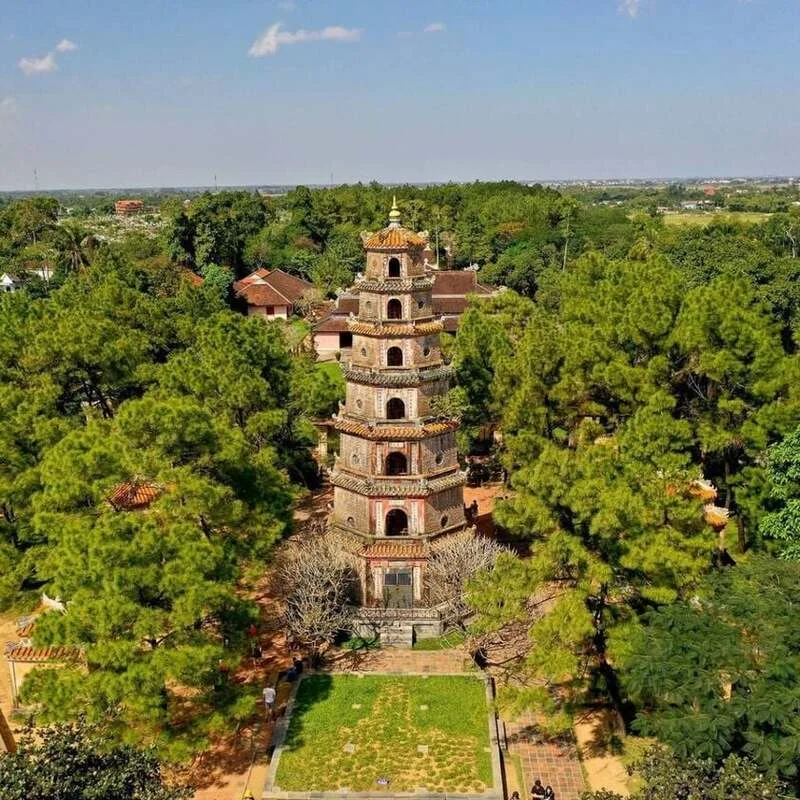
- Classic Hue Ancient Capital Day Tour: Visit the Imperial City of Hue in the morning to feel the grandeur of the century-old dynasty, enjoy Hue beef noodle soup (Bún Bò Huế) or royal pastries for lunch, and in the afternoon, head to the Tomb of Khai Dinh and either the Tomb of Tu Duc or Tomb of Minh Mang, then in the evening, visit Thien Mu Pagoda to enjoy the sunset over the Perfume River.
- Photography and Handicraft Cultural Experience: After visiting the Tomb of Khai Dinh, you can also visit the nearby Thuy Xuan Incense Village to photograph colorful incense flower bouquets and experience handmade incense making.
- Day Trip from Da Nang/Hoi An: If staying in Da Nang, a car ride through the stunning Hai Van Pass to Hue takes about 2 hours, making the Tomb of Khai Dinh a popular stop on cross-city day trips.
Transportation and Arrangement Suggestions
Traveling from Hue city center to the Tomb of Khai Dinh takes about 20 to 25 minutes by various means:
- Grab / Taxi: The most convenient and comfortable option, you can directly book a ride from your hotel in Hue city, with affordable one-way fares. If you plan to visit multiple royal tombs in succession, consider hiring a car for half a day or a full day for ease.
- Motorbike Rental for Independent Travel: Suitable for travelers who enjoy flexible arrangements, riding along National Route 49 or the banks of the Perfume River, with good road conditions and clear signage.
- Join a Day Tour with a Guide: If you wish to have someone explain the emperor's life and the feng shui principles behind the architecture, joining a Hue day tour with a Chinese-speaking guide is an excellent choice.
Visitor Guidelines
- Many and Steep Steps: The entrance to the tomb requires climbing 127 steps to reach the highest point at the Thien Dinh Palace, and the complex does not have accessible elevators or ramps, so those with mobility issues or families with strollers should take special care.
- Dress Appropriately: The Thien Dinh Palace contains altars and the emperor's statue, making it a solemn royal shrine. It is recommended to wear knee-length pants or skirts and tops that cover the shoulders to show respect.
- Preserve Historical Artifacts: The porcelain mosaic murals in the Thien Dinh Palace are extremely precious and fragile, so please do not touch the walls or climb on the statues during your visit.
- Prepare Cash or Book Electronic Tickets: The on-site ticket booth primarily accepts cash (VND), and electronic tickets can also be purchased in advance from the official online platform of the Hue Monument Conservation Center.
Frequently Asked Questions (FAQ)
Q1: How does the Tomb of Khai Dinh differ from other tombs in Hue (such as the Tomb of Tu Duc and the Tomb of Minh Mang)? Which one is worth visiting the most?
A1: The Tomb of Minh Mang emphasizes natural landscapes and symmetrical feng shui layouts, while the Tomb of Tu Duc leans towards the poetic Jiangnan garden style; the Tomb of Khai Dinh stands out with its "East-West hybrid architecture" and "extremely luxurious porcelain mosaic art." If you have limited time and can only choose one tomb, the Tomb of Khai Dinh is usually the top recommendation for international travelers due to its strong visual impact and engaging experience!
Q2: Will a day trip from Da Nang to the Tomb of Khai Dinh feel rushed?
A2: No, it won't. Traveling from Da Nang by car or joining a day tour to Hue, passing through Hai Van Pass or the tunnel, takes about 2 hours one way. Arranging "Imperial City of Hue + Tomb of Khai Dinh + Thien Mu Pagoda" in one day is a well-planned and relaxed cross-city route.
Q3: Does the ticket for the Tomb of Khai Dinh include other attractions? Is it worth buying a combo ticket?
A3: The single ticket for the Tomb of Khai Dinh is 150,000 VND for adults. If you plan to visit the Imperial City of Hue and 2 to 3 other tombs, it is highly recommended to purchase the "3 Attraction Combo Ticket" (420,000 VND) or the "4 Attraction Combo Ticket" (530,000 VND), which is valid for 2 days and can save you a considerable amount on admission fees.