Detailed Content
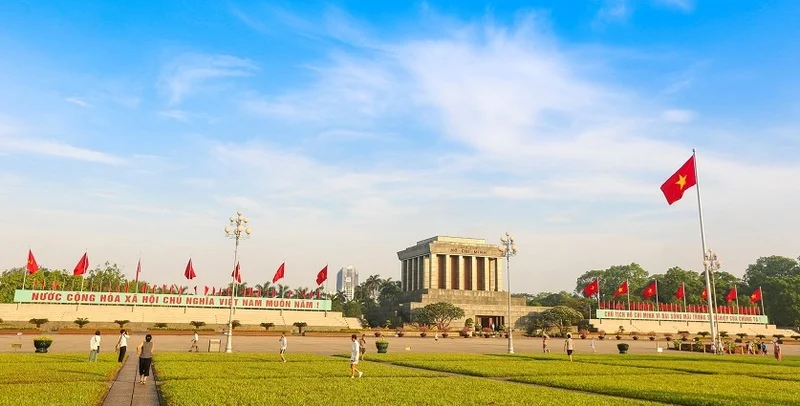
Historical Background: The Cradle of Vietnam Ba Dinh Square was originally a circular garden during the French colonial period, known as Pugininer Square. Its most glorious moment occurred on September 2, 1945. On that day, President Ho Chi Minh stood on the platform built here and read the Declaration of Independence to 500,000 compatriots, officially announcing the establishment of the Democratic Republic of Vietnam. From then on, this place became a symbol of Vietnam's national independence and a venue for major national gatherings and parades.
Must-See Highlights & Ceremonies
Flag Ceremonies This is the most solemn moment of the day.
Morning Flag Raising: When the national anthem plays, the honor guard in white uniforms will escort the national flag into the square. If you wake up early enough, it is recommended to arrive by 5:50 AM to watch the red flag rise in the morning light and feel the solemn patriotic atmosphere.
Evening Flag Lowering (21:00): This is a session that tourists can more easily participate in. At 9 PM, the square's broadcast will request all tourists to stop moving, remove their hats, and stand solemnly. Under the spotlight, the honor guard slowly lowers the national flag, creating a very touching scene.
Ho Chi Minh Mausoleum The main feature of the square is a magnificent gray granite building, where the body of President Ho Chi Minh is preserved for future generations to pay their respects. The words "CHỦ TỊCH HỒ-CHÍ-MINH" (President Ho Chi Minh) are engraved in deep red above the building. Even if you do not enter for a visit, the front of the mausoleum is the best spot for a photo with this historical landmark. (Note: Photography and noise are strictly prohibited inside the mausoleum, and long pants or knee-length skirts must be worn.)
168 Emerald Lawns The ground of the square is not covered with cement but is made up of 168 neatly arranged square lawns, separated by a wide cement walkway. The number 168 does not hold any special mythical significance in Vietnamese culture, but it visually creates an excellent sense of perspective and greenery, symbolizing eternal spring. (Friendly reminder: Please walk on the cement walkway and do not step on the lawns, as guards may whistle to stop you at any time.)
Nearby Attractions The area surrounding Ba Dinh Square is the most densely packed with attractions in Hanoi, and a half-day tour is recommended:
Presidential Palace: A striking yellow French-style building, originally the residence of the Governor-General of French Indochina.
House on Stilts: Located behind the Presidential Palace, a simple stilt house.
One Pillar Pagoda: A thousand-year-old temple just a 5-minute walk away.
Vietnam National Assembly Building: Located opposite the square, a dialogue between modern architecture and historical monuments.
Visiting Tips
Strict Security Checks: There are many checkpoints around Ba Dinh Square, and if you want to enter the mausoleum area, backpacks and water bottles usually need to be checked in.
Dress Code: Although the square is outdoors, if you want to get close to the mausoleum or enter for a visit, please do not wear shorts, short skirts, or sleeveless tops.
No Drones Allowed: This area is politically sensitive, and the use of drones is strictly prohibited.