Detailed Content
Historical Background: An Artistic Palace Built on Reclaimed Land The construction of the Hanoi Opera House began in 1901 and took ten years to complete. Surprisingly, this area was originally a swamp (an extension of Hoan Kiem Lake), and French engineers used tens of thousands of bamboo stakes driven into the ground to stabilize the foundation, supporting this massive stone structure. This opera house has witnessed key moments in Vietnamese history, including important mass meetings held by the Viet Minh during the August Revolution of 1945, making it a dual landmark of politics and culture in Hanoi.
Architectural Highlights: The Pinnacle of Neoclassicism
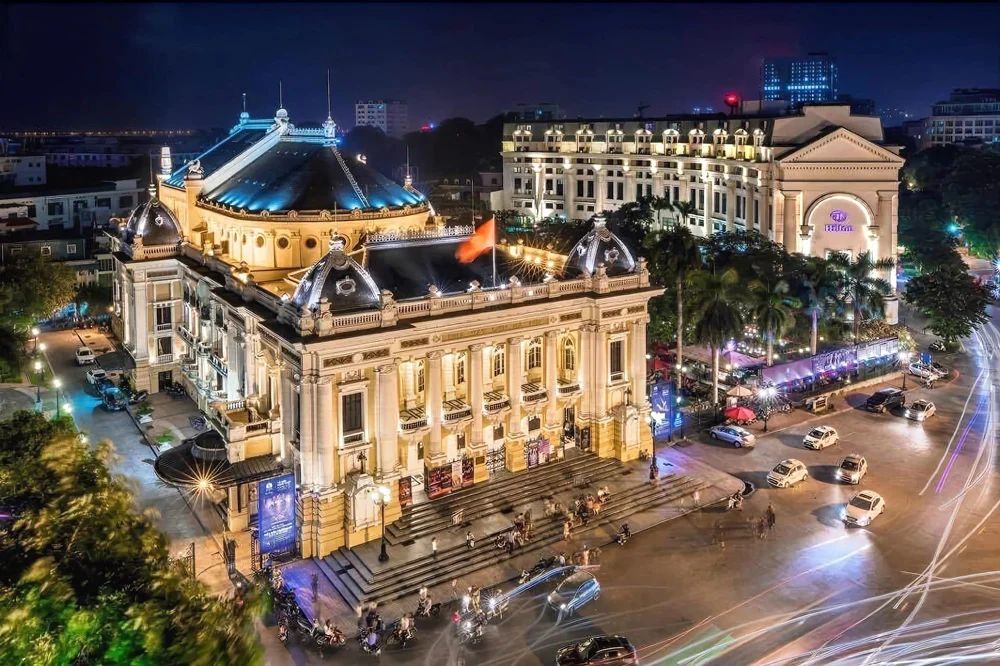
Exterior: The striking yellow walls paired with white window frames and decorations represent the classic color scheme of French Indochinese architecture. The towering Roman columns and exquisite wrought-iron balconies at the front showcase a strong classical atmosphere.
The Mirror Room: This is the most luxurious space within the opera house, located on the second floor. The floor is laid with imported Italian tiles, and the walls are adorned with large bronze mirrors and crystal chandeliers. It was once a social venue for receiving governors and royal family members, with a breathtaking opulence.
The Auditorium: With approximately 600 seats, it features a traditional horseshoe design, complemented by red velvet seats and a massive ceiling mural. The acoustic effect is excellent, allowing sound to fill the entire space without the need for microphones.
Must-See Performance: Lang Toi (My Village) Since you are at the opera house, it is highly recommended to purchase a ticket for Lang Toi (My Village).
This is not a traditional opera, but rather a Bamboo Circus, hailed as the "Vietnamese version of Cirque du Soleil."
Performers use only bamboo poles, rattan, and body techniques, combined with live traditional folk music, to depict rural life and customs in northern Vietnam.
Why is it a must-see? This show transcends language barriers, offers stunning visual effects, and allows you to legitimately enter the opera house, sitting in ancient red velvet chairs to enjoy a world-class artistic feast.
Visiting and Surrounding Recommendations (Practical Information)
Best Time for Photos: During the evening (Blue Hour). When the sky turns deep blue and the opera house lights up with golden light, it is the most beautiful moment to capture the architecture.
Highlands Coffee Outdoor Seating: On the right side of the opera house, there is a Highlands Coffee (known as the "Music in the Garden" area). If you do not wish to watch a show, you can buy a cup of coffee here and sit in the outdoor garden area to closely appreciate the architectural details of the opera house's side.
Dress Code Recommendation: If attending a performance, it is recommended to wear Smart Casual attire, avoiding flip-flops or overly casual shorts to match the elegant atmosphere of the theater.