Detailed Content
Historical Background: The Cultural Origin of Respect for Teachers and the Way
The Temple of Literature - National University (Van Mieu - Quoc Tu Giam) is located in the center of Hanoi and is a representative building of Vietnamese Confucian culture. The Temple of Literature was built during the reign of Emperor Ly Thanh Tong (1070), and the National University was established in 1076, specifically to educate the royal aristocracy's children, later opening its doors to outstanding students from the common people. This monument has withstood nearly a thousand years of war and change, yet still retains its ancient charm, witnessing Vietnam's emphasis on education and talent.
Must-See Highlights
Khue Van Cac: Built in 1805, this red two-story pavilion is exquisitely elegant, with round windows symbolizing the shining star of Khue. It is not only the symbol of the Temple of Literature but also the official symbol of Hanoi (you will see it on many tourist signs and even on the 100,000 VND banknote).
Doctor's Stelae: The most precious treasure of the Temple of Literature. Here stand 82 stone stelae, each resting on the back of a stone turtle, inscribed with the names and hometowns of those who passed the doctoral examination from 1442 to 1779. These stelae were designated as a World Memory Heritage by UNESCO in 2011.
Fun Fact: In the past, students liked to touch the turtle's head for good luck before exams, but now, to protect the monument, a fence has been set up to prohibit touching!
Thien Quang Well: Located behind Khue Van Cac, this square water pool symbolizes "the light of heaven and the shadow of clouds," reflecting the surrounding ancient trees and buildings, adding a tranquil and solemn atmosphere to the park.
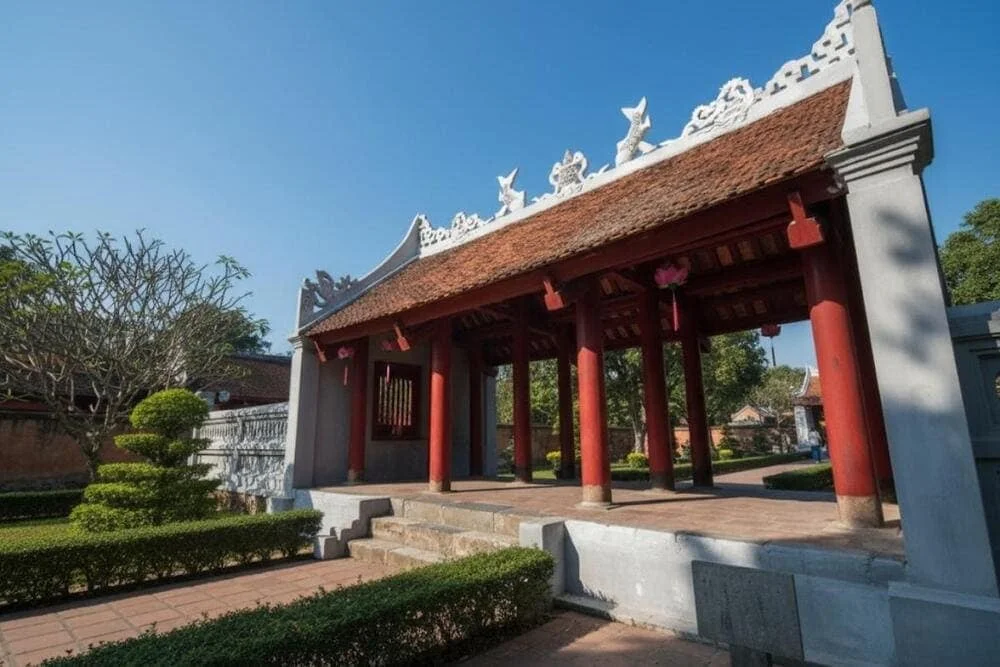
Main Courtyard and Great Hall: This is the main sacrificial area of the Temple of Literature, dedicated to Confucius and his four disciples (the Four Companions). The architectural style features traditional red-tiled eaves, full of Eastern charm.
Visiting Information
Dress Code: As this is a solemn place for worshiping Confucius, please avoid wearing overly short pants, skirts, or sleeveless tops when visiting (although checks may not be strict, it is recommended to dress appropriately to show respect).