Detailed Content
Stepping into Hue for the first time, many people's feelings are always quite special—this ancient capital located in central Vietnam does not have the bustling vibrancy of Ho Chi Minh City, nor the compact liveliness of Hanoi, but instead exudes a calm and time-worn royal atmosphere by the Perfume River. If you ask the editors at VietGo what cannot be missed on a free trip to Hue, the answer is undoubtedly the "Hue Imperial City" (Hoàng thành Huế, often referred to as 'The Citadel'). Crossing the bridges over the moat and stepping through the towering Meridian Gate, what unfolds before you is a vast expanse interwoven with vermilion palaces, mottled city walls, and tranquil gardens. Today, let's follow the editor's footsteps and explore this World Heritage Site that records the glory and traces of Vietnam's last dynasty!
Attraction Introduction and Century-Old Dynasty History
The Hue Imperial City was ordered to be built by Emperor Gia Long, the founding monarch of the Nguyen Dynasty, in 1804, serving as the political, cultural, and religious center during the Nguyen Dynasty (1802-1945).[Hue World Heritage]
Hue Monuments Conservation Centre: Hue Imperial City ↗
As the core royal architectural complex within the Complex of Hué Monuments, the Hue Imperial City was listed as a World Heritage Site by UNESCO in 1993.[UNESCO]
UNESCO World Heritage Centre: Complex of Hué Monuments ↗
The entire design of the Imperial City integrates Eastern feng shui philosophy and traditional Vietnamese aesthetics, drawing inspiration from the layout concepts of the Forbidden City in Beijing. The Imperial City faces south, with the Perfume River serving as a natural front barrier, and utilizes Ngu Binh Mountain as a backdrop, creating a perfect feng shui arrangement. Although many precious buildings within the Imperial City were unfortunately severely damaged during the wars of the 20th century (especially during the Tet Offensive in 1968), after years of continuous restoration and protection, the Imperial City still radiates an irreplaceable imperial charm and historical depth.
Main Features and Architectural Aesthetics of the Hue Imperial City
The overall structure of the Hue Imperial City is roughly divided into three layers: the outermost layer is the "Hue Citadel" (Kinh thành) surrounded by a moat, the middle layer is the "Imperial City" (Hoàng thành) where national ceremonies and offices are held, and the innermost core is the "Purple Forbidden City" (Tử Cấm Thành) where the emperor and his concubines lived. This layered layout showcases a high degree of royal majesty.
In terms of architectural craftsmanship, the Hue Imperial City displays a unique Vietnamese court aesthetic. In addition to the common Chinese-style flying eaves and red-lacquered columns, the most stunning feature is the extensive use of "mosaic art" (Khảm sành sứ)—architects used broken colored porcelain and glass pieces to create vivid images of flying dragons, phoenixes, auspicious clouds, and floral patterns on walls, ridges, and door frames. Additionally, to adapt to the tropical monsoon climate of central and southern Vietnam, spacious and ventilated wooden corridors were designed on both sides of the palace, creating charming light and shadow effects when sunlight falls, making it a distinctive visual landscape within the Imperial City.
Five Must-Visit Highlights
The Imperial City covers a vast area, and first-time visitors may not know where to start. It is recommended to include the following five key areas in your itinerary:
- Meridian Gate (Ngọ Môn): The main entrance and iconic building of the Imperial City, topped with the magnificent "Five Phoenix Pavilion." This was once the site where the emperor held important ceremonies, military parades, and issued edicts; in 1945, Vietnam's last emperor, Bao Dai, announced his abdication here, symbolizing the official end of Vietnam's feudal dynasty.
- Thai Hoa Palace (Điện Thái Hòa): The heart of the Imperial City, where the emperor held coronation ceremonies, grand court meetings, and met foreign envoys. The hall features 80 wooden pillars covered in red lacquer and gold leaf, intricately carved with lifelike dragons, exuding grandeur.
- The Mieu Temple and Nine Dynastic Urns (Thế Miếu & Cửu Đỉnh): The Mieu Temple is a shrine dedicated to the deities of the Nguyen Dynasty emperors; in front of the temple square are nine large bronze urns (Nine Dynastic Urns), each intricately engraved with reliefs representing the landscapes, products, and customs of various regions of Vietnam, symbolizing national unity and the permanence of royal power.
- Truong Sanh Residence and Dien Tho Residence (Cung Trường Sanh & Cung Diên Thọ): These two palaces served as the residences of the Empress Dowager and the Queen Mother, featuring courtyards with small bridges, flowing water, and unique rock formations, showcasing an elegant and tranquil atmosphere distinct from earlier dynastic architecture.
- Duyet Thi Duong Royal Theater (Duyệt Thị Đường): The oldest existing royal theater in Vietnam, once dedicated to performing court music (Nhà nhạc) and court dramas. Now restored, visitors can not only appreciate the ancient theater structure but also have the opportunity to enjoy live performances.
Suitable Travelers and Recommended Activities
The Hue Imperial City is very suitable for the following types of travelers:
- Cultural and History Enthusiasts: If you enjoy delving into East Asian history, dynastic changes, and World Heritage Sites, the rich stories and relics here will certainly provide you with a wealth of insights.
- Photography and Vintage Aesthetics Lovers: The vermilion corridors, mottled yellow walls, stone bridges, and palaces within the Imperial City offer a visually stunning ancient aesthetic. Many travelers specifically rent traditional Vietnamese clothing (Áo dài) or royal costumes at the entrance of the Imperial City for photo opportunities.
- Leisurely Strollers: The Imperial City area is vast and lush, making it ideal for escaping a tight schedule and spending half a day wandering, stopping, and savoring the tranquility of the ancient capital.
Recommended Itinerary: It is suggested to enter through the Meridian Gate, visit the Thai Hoa Palace and the ruins of the Purple Forbidden City along the central axis, then head west to the Mieu Temple and the Nine Dynastic Urns, followed by the Dien Tho Residence and Truong Sanh Residence to experience the royal garden of the harem, and finally exit through the east or north gate. Renting an audio guide or inviting a local guide can make the historical anecdotes behind the architecture come alive.
Itinerary Suggestions and Hue Route Planning
If you want to arrange a one-day tour in Hue, it is recommended to use the Imperial City as the core axis and connect the following route:
- Morning (08:00 – 11:30): Visit the "Hue Imperial City," avoiding the high temperatures of midday, and take ample time to explore the Meridian Gate, Thai Hoa Palace, and the Mieu Temple.
- Lunch (11:30 – 13:30): Enjoy local specialties in Hue, such as Hue beef noodle soup (Bún Bò Huế), royal cakes (Bánh Bèo, Bánh Bột Lọc), or clam rice (Cơm Hến).
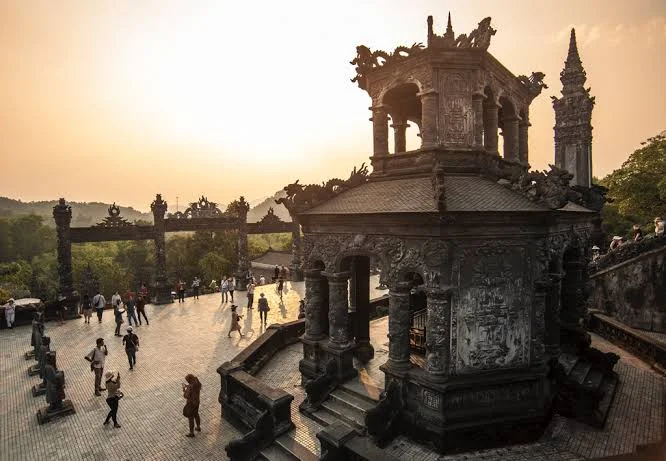
- Afternoon (13:30 – 16:00): Head to the outskirts to visit representative Nguyen Dynasty tombs, such as the exquisitely luxurious "Tomb of Khai Dinh" (Lăng Khải Định) or the Jiangnan-style "Tomb of Tu Duc" (Lăng Tự Đức).
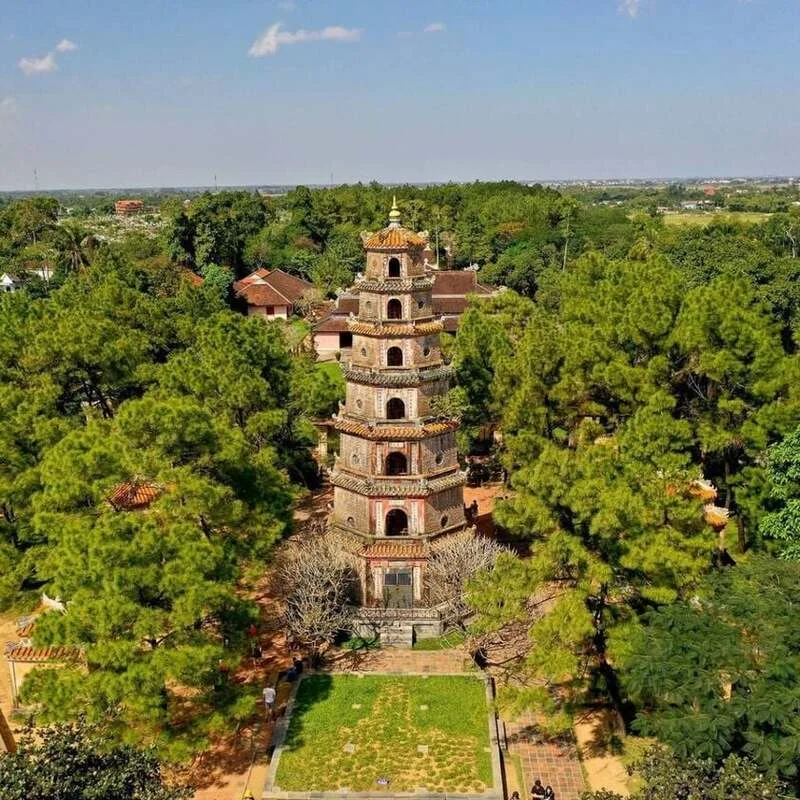
- Evening (16:30 – 18:30): Go to "Thien Mu Pagoda" to enjoy the sunset over the Perfume River, or take a boat ride on the Perfume River to conclude a day of cultural exploration perfectly.
Transportation and Arrangement Suggestions
The Hue Imperial City is located to the north of downtown Hue, making transportation very convenient:
- Ride-hailing / Taxi (Grab / Taxi): Taking a car from a hotel in downtown Hue or Hue Railway Station to the Meridian Gate (Ngọ Môn) takes about 5 to 10 minutes, making it the most convenient and comfortable option.
- Bicycle / Motorbike Rental: The terrain in downtown Hue is flat, and many independent travelers choose to ride bicycles or motorbikes to explore the city, with parking areas available at the entrance of the Imperial City.
- Walking: If you are staying in the tourist area on the south bank of the Perfume River (such as Lê Lợi or Nguyễn Định Chiểu), you can walk across Truong Tien Bridge (Cầu Trường Tiền) or Phu Xuan Bridge (Cầu Phú Xuân) to reach the Imperial City, taking about 15 to 20 minutes.
Visiting Guidelines
- Dress Code: The Imperial City includes several worship halls and temples (such as the Mieu Temple), so please wear appropriate clothing that covers the shoulders and knees to show respect for the local culture and beliefs.
- Sun Protection and Hydration: The Imperial City area is vast and has few outdoor shelters; the sun in central and southern Vietnam can be quite harsh, so be sure to prepare sun umbrellas, sunscreen, and enough drinking water.
- Tickets and Payments: The on-site ticket office usually prioritizes cash (VND), but tickets can also be purchased in advance through the official online platform. If you plan to visit multiple tombs, buying a 3 or 4 attraction combo ticket will be more economical.
- Protecting Historical Sites: Some buildings in the area are still under restoration, so please do not cross warning lines or touch murals, and help preserve cultural heritage.
Frequently Asked Questions (FAQ)
Q1: How much time should be reserved for visiting the Hue Imperial City?
It is recommended to reserve 2.5 to 4 hours. The Imperial City area is very large; if you just quickly walk through the central axis, it will take about 1.5 hours; however, if you want to savor the Mieu Temple, Nine Dynastic Urns, harem gardens, and exhibition halls, around 3 hours would be most comfortable.
Q2: Are there combo ticket discounts for purchasing tickets to the Imperial City?
Yes! The Hue Monuments Conservation Centre offers 3 or 4 attraction combo tickets that include the Imperial City and major tombs (such as the Tomb of Khai Dinh, Tomb of Tu Duc, Tomb of Minh Mang), valid for 2 days, which can save a lot compared to buying individual tickets.
Q3: Can I wear an Áo dài to take photos inside the Imperial City?
Absolutely! There are many rental shops around the Imperial City offering various styles and accessories of Vietnamese clothing. The vermilion corridors, yellow walls, and ancient gates of the Imperial City provide excellent backdrops for photography.