Detailed Content
If you share the same passion as the editors at VietGo for exploring structures steeped in history and characterized by a striking industrial ruin aesthetic, then a visit to Hanoi would be incomplete without crossing the Long Biên Bridge (Cầu Long Biên). This somewhat weathered bridge, with its rusted steel framework, is not just a crossing over the Red River; it stands as a robust testament to the history of Hanoi. As you step onto the bridge, you'll hear the rumbling of vehicles passing over the steel plates beneath your feet and witness old trains slowly making their way through the geometric steel framework. This retro cinematic experience is sure to keep photographers clicking away! Join me as we explore this authentic and awe-inspiring steel giant through my lens!
Attraction Overview: A Century-Old Steel Network Over the Red River
The Long Biên Bridge (Cầu Long Biên) spans the Red River in Hanoi, connecting the Hoàn Kiếm District and Long Biên District. Construction began in 1898, and the bridge was completed in 1902, stretching over 2,000 meters in length. [Wikipedia]
Originally named the Paul Doumer Bridge (Pont Paul-Doumer) during the French colonial period, it was named after the then Governor-General of French Indochina. At that time, it was one of the longest steel bridges in Asia, constructed by the French engineering firm Daydé & Pillé. Its sleek geometric arch trusses reflect the steel aesthetics of the late 19th-century French industrial era, often drawing comparisons to the design style of Gustave Eiffel, the architect of the Eiffel Tower, earning it the nickname "the reclining Eiffel Tower." Despite suffering multiple bombings during the Vietnam War, the bridge has stood resilient, and its weathered appearance today adds a poignant touch of heroism to its history.
Main Features: A Fusion of Industrial Ruin Aesthetics and Vibrant Local Life
The charm of Long Biên Bridge lies in its perfect blend of "industrial ruin style" and the "vibrant life of Hanoi's locals":
- Retro Tension of Steel Trusses: After a century of weathering and the river's humidity, the steel framework displays rich shades of burnt brown and rust. The geometrically symmetrical steel beams create a tunnel of light and shadow under the sun.
- Unique Left-Hand Traffic: Unlike the traditional right-hand traffic in Vietnam, Long Biên Bridge still adheres to the "left-hand traffic" rule from the French colonial era, with railway tracks in the center and lanes for motorcycles, bicycles, and pedestrians on either side.
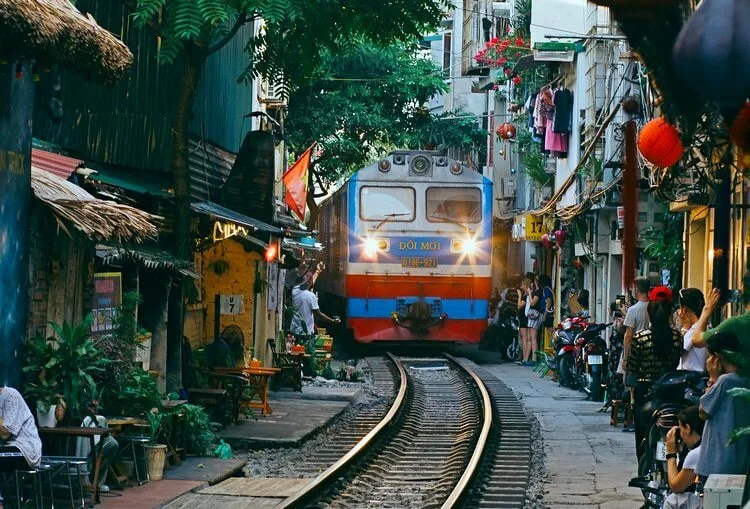
- Dynamic Trains and Everyday Scenes: Today, slow passenger and freight trains still traverse the bridge. As trains rush by just a few meters away, accompanied by the calls of vendors below, they create a striking tableau of daily life.
Ideal For: Photographers, Ruin Aesthetic Enthusiasts, and History Explorers
This attraction is perfect for the following types of travelers:
- Portrait and Street Photographers: Those who appreciate the texture of film, retro industrial aesthetics, and street realism will find this spot to be the best outdoor shooting location in Hanoi.
- History and Architectural Culture Buffs: Travelers eager to witness 19th-century French steel engineering and experience the scars of Vietnam's modern history.
- Leisurely Strollers: Those who enjoy the cool breeze of the Red River at dusk, capturing the sunset by the riverside, and experiencing the local pace of life.
Recommended Photography Tips: Three Classic Angles and Techniques
To capture stunning visuals at Long Biên Bridge, I've compiled three must-visit photography angles for enthusiasts:
1. Perspective from the Pedestrian Walkway at the Bridgehead
Start from the pedestrian walkway on the Hoàn Kiếm District side, using the repetitive geometric arches on either side as leading lines. A medium to telephoto lens (like 85mm or 70-200mm) is recommended to create a strong sense of geometric compression, perfect for capturing portraits with a ruin aesthetic.
2. Aerial Shots from Long Biên Railway Station or Nearby Cafés
If you want to capture the entire bridge extending like a dragon towards the opposite bank of the Red River, consider visiting a scenic café near the bridgehead (like Serein Café & Lounge). Enjoy a Vietnamese coffee on a high terrace while overlooking the trains entering the steel structure, offering excellent views.
3. Sunset Silhouettes from the Red River Middle Island
Underneath the bridge lies a vast expanse of the Red River Middle Island (Bãi giữa Sông Hồng), home to numerous banana groves and crops. In the evening, looking up from the island against the backdrop of the setting sun can yield magnificent silhouettes of the steel structure against a golden sky.
Suggested Itinerary: Half-Day Walking Tour of Hanoi's Old Quarter
Long Biên Bridge is very close to Hanoi's Old Quarter, and I recommend planning a 2 to 3-hour "Old Quarter History and Photography Half-Day Tour":
Recommended Route: Start with light snacks at Đồng Xuân Market (Chợ Đồng Xuân) ➔ Walk to Long Biên Railway Station (Ga Long Biên) to soak in the nostalgic atmosphere ➔ Climb onto Long Biên Bridge for photos of the steel framework and trains ➔ Enjoy iced coconut coffee at a riverside café while admiring the sunset over the Red River ➔ In the evening, visit the Long Biên Night Market to experience local flavors.
Key Highlights: Capturing Passing Trains and Life's Details
When visiting Long Biên Bridge, aside from photographing the steel framework, there are several essential experiences not to be missed:
- Photographing Trains Passing Through: Several trains travel daily between Hanoi and Hải Phòng or Lào Cai. When you hear the distant whistle, make sure to stand safely on the pedestrian walkway and time your shot to capture the train as it crosses the steel beams.
- Admiring the Weathered Details of the Bridge: Pay close attention to the heavy rivets at the joints of the steel framework and the areas where the bridge was repaired after bombings; each dent tells a story of history.
- Experiencing the Flow of Street Vendors: In the mornings and evenings, farmers often ride bicycles loaded with fresh flowers or produce across the bridge, showcasing the most authentic cultural scenery of Hanoi.
Transportation and Planning Tips: How to Get to Long Biên Bridge
Long Biên Bridge is located at the edge of Hanoi's city center, making it very accessible:
- Taxi/Grab: If departing from Hoàn Kiếm Lake or the Old Quarter, a Grab ride takes only about 5 to 10 minutes. You can set your destination to "Ga Long Biên" (Long Biên Railway Station) or "Cầu Long Biên," and walk to the bridge after getting dropped off.
- Walking: It's only about 500 meters from Đồng Xuân Market to the bridgehead, making it a great extension for a walking tour of the Old Quarter.
- Bicycle/Motorbike: If you rent a motorbike, be mindful of the "left-hand traffic" rule on the bridge, and note that the steel surface can be bumpy, so slow down while riding.
Safety Tips: Guidelines for Safe Photography and Walking
To ensure a smooth and safe experience while photographing and visiting, please adhere to the following tips:
1. Absolutely no crossing the railway tracks or standing in the center of the tracks
The central railway of Long Biên Bridge is still in operation! Although trains move slowly, their width nearly fills the track area. Please do not step onto the tracks for the sake of a photo; always stay on the pedestrian walkways on either side.
2. Watch your step and be cautious of strong winds
The pedestrian walkway is made of concrete and metal plates, with some gaps or unevenness between sections. Focus on your footing while walking, and avoid wearing high heels. Additionally, the wind can be strong over the Red River, so keep a firm grip on your phone and camera while shooting.
3. Keep your personal belongings secure
Due to heavy motorbike traffic on the bridge, be cautious when taking photos near the edge of the walkway. It's advisable to use straps for your phone and camera to prevent them from falling off the bridge or causing accidents.
Frequently Asked Questions: Long Biên Bridge Travel FAQ
Q1: Is there an entrance fee for Long Biên Bridge?
No, Long Biên Bridge is a completely open public transport bridge, free of charge, allowing pedestrians and cyclists to cross at any time, 24 hours a day.
Q2: When is the best time to take photos at Long Biên Bridge?
The best times are early morning from 6:00 to 8:00 and late afternoon from 4:30 to 6:00. In the morning, there are fewer crowds and vehicles, and the light is soft; in the evening, you can capture the atmospheric sunset over the Red River and golden light.
Q3: Can you really walk on Long Biên Bridge? Is it dangerous?
Yes, the bridge has designated pedestrian and non-motorized lanes on either side. As long as you stay clear of the central railway tracks and pay attention to the uneven concrete slabs, walking and visiting are very safe.