Vietnam H'Mong 'Bride Stealing' Culture: Analysis of Traditional Marriage Customs, Love, and Modern Controversies
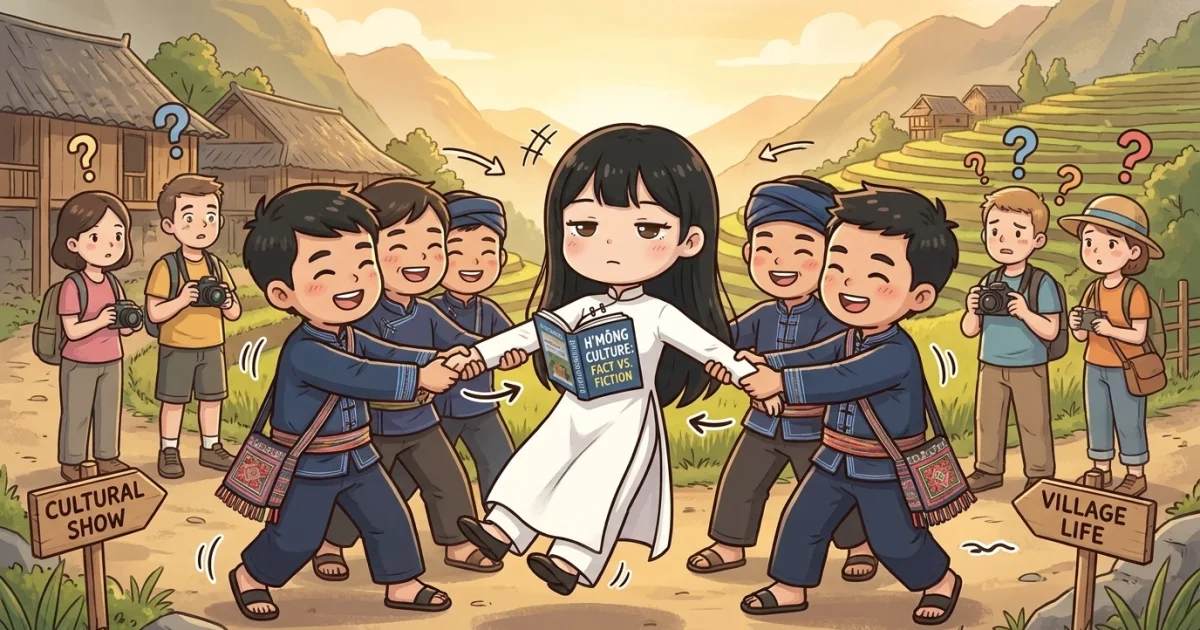
To be clear: the 'bride stealing' culture you hear about in northern Vietnam mostly refers to the H'Mong practice of kéo vợ, which is based on mutual affection and the option to refuse, and is different from forced abduction.
Many travelers arriving in Sapa or Ha Giang hear the term 'bride stealing' in the misty morning markets, but what comes to mind is often the violent images from the news.
In fact, kéo vợ is originally a process that brings young people and their families to the negotiation table, rooted in love, bride price, and community order.
1. What exactly is kéo vợ? Understanding it through stories rather than textbooks
Kéo vợ literally translates to 'bringing the bride home,' which is why the term 'bride stealing' appears in Chinese, sounding full of tension.
In traditional contexts, the couple usually knows each other well, having some affection or understanding, before moving to the next step of 'short-term stay at home, followed by discussions of marriage by the elders.'
During the short stay, there are usually female relatives present, and the girl can still say no; this is a boundary and dignity that is repeatedly emphasized within the community.
The traditional process generally includes:
- Meeting at the market or festival and expressing feelings
- Discussing the timing and bringing the girl back to the boy's home with relatives
- Staying for a few days, mainly supervised by female elders
- The girl confirms whether she is willing to continue
- The elders from both sides discuss bride price, wedding date, and rituals
This is not about randomly grabbing a stranger, but rather using 'come to my house for a visit' as a starting point for family discussions about feelings.
2. Why use 'stealing'? The trade-offs between love, parents, and bride price
You might ask: since proposals can be made normally, why still use kéo vợ? The answer often lies in the calculations of bride price and parental expectations.
In Vietnam's highland communities, bride price (thách cưới) emphasizes face, requiring silver jewelry, cattle, pigs, and rice wine, which puts many poor young men in a difficult position.
When two young people fall in love but the girl's parents prefer wealthier suitors, kéo vợ allows their mutual affection to be recognized by the community, giving them leverage in negotiations.
Markets and Tet: How young people start a relationship
Sunday markets and Tet festivals are social venues for young people, where throwing embroidered balls (ném pao) and playing the bamboo flute (khèn Mông) serve as languages of affection.
In the areas around Bắc Hà and Sapa, markets are not just for buying and selling, but also places for singing duets, exchanging tokens, and making plans for future meetings.
Pressure of bride price and family dignity: The social flexibility of kéo vợ
If high bride prices are confronted head-on, it often leads to mutual harm; bringing the girl home allows elders to 'assess the situation' and negotiate, providing flexibility for silver jewelry and rice wine.
This kind of flexibility balances family dignity with the choices of young people, not a romanticized elopement, but a compromise in reality.
When parents oppose: Why 'going to the boy's home' becomes a procedure
When a girl steps into the boy's home, it symbolizes that the relationship has been recorded by the community, making it difficult for elders to simply turn the page, thus forcing negotiations to begin.
The key remains the girl's 'final consent'; otherwise, this procedure loses its reason for existence.
3. The dividing line between tradition and coercion: The difference between kéo vợ and bắt vợ
The real controversy arises from confusion: treating voluntary kéo vợ as non-consensual bắt vợ, which is shocking but far from traditional.
Within the community context, the boundaries between the two are clear, especially regarding 'the ability to refuse.'
- Consent: Kéo vợ is based on mutual affection or understanding; bắt vợ lacks the girl's consent.
- Ability to refuse: Kéo vợ allows for a clear 'no' during the short stay; bắt vợ often involves coercion or intimidation.
- Involvement of minors: Kéo vợ generally does not involve child marriage; cases of bắt vợ often cross legal lines.
- Legal status: Voluntary marriages can be recognized; forced and child marriages are illegal and punishable.
Mixing the two stigmatizes the community and obscures the illegal issues that need to be addressed.
4. Modern controversies and real cases: Contexts beyond the news lens
In 2022, a video surfaced in Mèo Vạc District, Hà Giang Province, showing teenagers forcibly pulling a girl by the roadside, prompting police intervention and legal action.
This was a distorted form of bắt vợ, not a marriage custom recognized by the community, and local authorities have clearly denied this practice.
For follow-up events and official statements, refer to reports and legal interpretations from Voice of Vietnam, where local authorities continue to promote the avoidance of child marriage and forced marriages.
Source: VOV on the legal handling of distorted 'bride stealing'
Legal red lines: What you need to know about age and consent
The legal marriage age in Vietnam is 20 for men and 18 for women; forced marriages and child marriages (tảo hôn) are illegal.
If you see what appears to be a forced abduction on the street, the correct action is to report it to the police or seek assistance from a guide.
5. 'Children of the Mist': When tradition meets a girl's own choices
If I had to use one person to clarify the gray areas of culture, I would mention the Sapa girl Di.
The documentary 'Children of the Mist' follows her for several years, capturing her struggle between school and marriage customs.
The film was nominated for the top 15 in the 95th Academy Awards for Best Documentary Feature, discussing 'consent' and 'the right to grow up.'
Di's two doors: To go to school, or to become a bride too soon
While her peers start discussing marriage, Di wants to continue her studies, asking herself: Am I ready?
She debates with her family and dialogues with her peers, allowing the audience to see the girl's agency within tradition.
Behind the lens: Culture is not a souvenir
The director does not demonize anyone nor romanticize bride stealing, but rather holds onto the main thread of 'consent.'
This is also the value that should be prioritized when discussing the marriage customs of the Vietnamese Miao.
Reference: IDFA 'Children of the Mist' film page
6. How does the younger generation view it? When roads, phones, and schools change the choices
In recent years, with improved roads and communication, young people have seen the outside world, leading to more answers about 'whether to marry and when to marry.'
Local governments and women's unions have long promoted 'no child marriage, consent is necessary,' and schools have brought legal and gender education into the mountains.
Kéo vợ has faded into a symbolic procedure in many villages, with more youth choosing love freely and handling marriages legally.
However, significant differences remain between regions, and the same term may have different practices and feelings in different eras and families.
7. When in Sapa and Ha Giang, how to approach this culture as a traveler
You may see embroidered ball throwing or bamboo flute performances during festive events, which are mostly cultural displays, not actual 'bride stealing.'
Real family discussions and rituals usually take place indoors, belonging only to relatives and friends, and will not become paid experiences.
- Ask for permission first: Before taking photos or videos, obtain consent from the individuals and elders.
- Don't be curious: Avoid easily forwarding online images of abductions; report any suspected coercion.
- Respect age limits: Remember the legal marriage age and consent principles in Vietnam, and do not wrap illegal practices in 'culture.'
- Support local: Purchase compliant handmade goods and participate in community tours to ensure profits return to the community.
- Make good use of guides: When language and cultural differences are significant, seek help from local guides.
If you want to extend your reading journey, you can refer to Vietnam Sapa Free Travel Guide.
8. Returning to the most critical point: The culture of bride stealing in Vietnam is not a uniform face
Even among the H'Mong, practices of kéo vợ can vary greatly between different villages and eras.
When we talk about 'bride stealing in Sapa' or 'Vietnamese Miao marriage customs,' please first distinguish between 'voluntary procedures' and 'non-consensual violence.'
Understanding differences, respecting the law, and placing 'consent' at the forefront is the best attitude for travelers facing culture.
Postscript: Two things you might also want to know
Many public media outlets include the 'short stay and option to refuse' aspect of kéo vợ in their introductions, reminding the outside world not to take news headlines as the whole story.
Government channels also mention that the beauty of traditional marriage customs lies not in abduction, but in providing both families the opportunity to discuss a good future.
Note: Details may vary between villages; for important and potentially changing information, please refer to local elders and the latest official announcements.```