
2026 Ho Chi Minh Nightlife Guide: District Map and Rules for Taiwanese, Japanese, and Korean Male Guests
Want to find places to go in Ho Chi Minh City at night in the shortest time? Remember one key point: Ho Chi Minh City is the face of Vietnam's nightlife, divided into three main areas for Japanese, Korean, and Taiwanese guests, each with its own style and pricing, and they do not disturb each other.
After foreign investment, District 1, District 7, and District 5 have formed distinct communities of foreigners, with language, menus, and services tailored to them, making it easy for newcomers to avoid pitfalls by following the areas.
This article, from the perspective of an experienced traveler, clearly explains the tripartite division of the three countries, the tipping culture and unspoken rules in Vietnam, late-night transportation with Grab, and how to avoid pitfalls when ordering.
Introduction: Why has Ho Chi Minh City become the face of Vietnam's nightlife?
This city has a large expatriate population and a dense business district, leading to a complete nighttime ecosystem of Japanese, Korean, and Chinese establishments, with a wide variety of options open late.
For male travelers from Taiwan, Japan, and Korea, the biggest advantages are "low language barriers, mature activities, and clear pricing," allowing guests from different countries to find a sense of belonging in their own territory.
- Want stability: Go to Le Thanh Ton Japanese Street, where the staff understands Japanese and the rules are clear.
- Want a complete experience: Head to Phu My Hung in District 7 for Korean BBQ + KTV + after-party all in one go.
- Want high CP: District 1 Lounge/Bui Vien is lively, while District 5 and District 4 focus on seafood and Taiwanese KTV.
First Section: Ho Chi Minh Nightlife "Tripartite Division" District Map
Choose the area first and then the venue, which will save time and money compared to blindly rushing in. Below, we break down the three main battlefields for you.
Each area has its own language, consumption rhythm, and SOP, so even newcomers can enjoy themselves like regulars by following the map.
Japanese Territory: Le Thanh Ton (黎聖宗路) Japanese Street
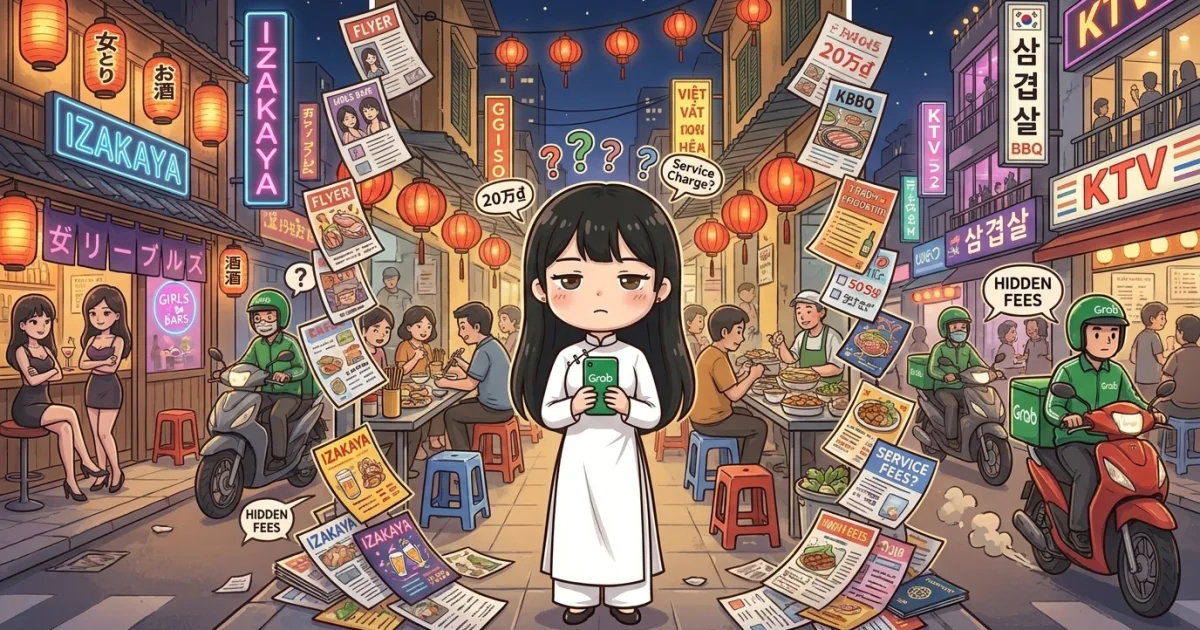
Le Thanh Ton and Thai Van Lung alleys are famous Japan Towns, featuring a high density of izakayas, Girls Bars, and Japanese barbershops, with a strong Showa-era vibe and a high level of Japanese language proficiency.
The common pattern is to start at an izakaya after work, then move to a Girls Bar or a small lounge, with transparent pricing and meticulous service, making it popular among Japanese business travelers.
- Store Type Features: Talking/Girls Bars focus on chatting and drinking, with a common "ladies drink" system; always ask about prices and cup regulations before ordering.
- Language Advantage: Bartenders and managers generally speak Japanese, and English is also understandable; Chinese is relatively rare.
- Le Thanh Ton Japanese Girls Bar Tipping: Depending on service and time, it usually ranges from 200,000–500,000 VND/person; check if the bill includes a service charge.
- Experienced Traveler Reminder: Clarify the minimum consumption, service charge percentage, and taxes; avoid continuously ordering "ladies drinks" without checking prices.
Further Reading: The Smart Local's introduction to Japan Town confirms the high density of Japanese establishments and language friendliness (in English) https://thesmartlocal.com/vietnam/saigon-japan-town/.
Korean Nightlife: District 7 Phu My Hung (富美興)
Phu My Hung is known as "Seoul within Ho Chi Minh City," starting with Korean BBQ + soju, then moving to Korean KTV or bars, and often featuring after-party spots after golf.
The venues are new, spacious, and have many private rooms, with Korean language services widely available, suitable for group activities.
- Typical Process: High-end Korean BBQ warm-up → Korean KTV private room → hidden bars to wrap up.
- Suitable Clientele: Korean guests and business groups who value privacy in private rooms and group atmosphere.
- Note: Private room timing, fruit plates, and drinks are often priced separately; check how packages are written and whether they charge by headcount or by time.
- Transportation Suggestion: District 7 is a distance from District 1; definitely use Grab for late-night trips.
Reference: Vietcetera's introduction to the Phu My Hung lifestyle area (in English) https://vietcetera.com/en/five-things-to-do-in-phu-my-hung.
Taiwanese Territory: Core of District 1 and Chinese Area in District 5
Taiwanese guests prefer high CP and diverse combinations: start with a drink at a Lounge Bar or Rooftop in District 1, then head to Bui Vien for some excitement, and finish with late-night seafood in District 5 or District 4.
The Chinese area in District 5 and Yongqing Street in District 4 are famous for seafood stalls and Cantonese and Taiwanese stir-fry, with friendly prices and long late-night hours.
- District 1 Bar and Bui Vien Guide: The atmosphere is strong on the backpacker street, with loud noise and dense crowds; keep your phone and wallet secure. Introduction to Pham Ngu Lao Street and Bui Vien nightlife
- District 5 Taiwanese KTV and Seafood Stalls: Suitable for group after-parties; remember to discuss private room hours and minimum spending on food and drinks first.
- Seafood Late-night Route: Cross the bridge from District 1 to District 4 Yongqing Street, where there are many choices for grilled seafood at friendly prices.
- Language: Chinese is more commonly used in District 5 and District 4, but menus are still primarily in Vietnamese, so it's recommended to use a translation app to confirm.
If you want to quickly understand the atmosphere of each area, you can first check Ho Chi Minh City Attractions and Area Guide.
Second Section: Must-See for Newcomers! Three Unwritten Rules of Southern Vietnam Nightlife
Understanding the following three things will make your Ho Chi Minh experience much smoother, especially for first-time Taiwanese, Japanese, and Korean male guests.
The key is not to spend recklessly but to understand the rules, the market, and how to move around.
1) The Real Face of "Tipping"
Vietnam originally did not have a strong tipping culture, but it has formed established habits in nightlife venues catering to foreigners.
Japanese and Korean travelers rarely tip at home, so remember to do so in Ho Chi Minh; Taiwanese travelers should not be overly generous, but give according to the market.
- Basic Concept: Check if the bill includes a service charge (usually 5–10%) before deciding whether to give extra.
- Common Range: Nightlife service staff typically receive 200,000–500,000 VND/person, depending on interaction and time.
- Le Thanh Ton Japanese Girls Bar: If there are "ladies drinks," confirm the unit price and number of drinks first; ask clearly if tips are calculated separately.
- General Dining and Grab: Not mandatory; if the service is excellent, giving 20,000–50,000 VND is a nice gesture.
2) Safety in Transportation and Area Transfers
Always use Grab for late-night transfers to avoid roadside taxis and unlicensed vehicles, reducing the risk of detours and sudden price increases.
If there are many people, split into two cars, set the pickup point at a well-lit intersection or hotel entrance, and avoid getting into cars in front of bars to prevent confusion.
- Ho Chi Minh Late-night Grab Safety Tips: Before getting in, compare the license plate, car model, and driver’s photo.
- Payment: Newcomers are advised to use Grab's card payment first for clearer transactions; this helps avoid disputes.
- Route: Le Thanh Ton ↔ District 1 bar area can be walked in a short distance; be sure to call a car to Phu My Hung in District 7.
- Personal Items: In crowded places, avoid looking at your phone while walking; keep your backpack's zipper facing forward.
Both the police and media remind to avoid taking unofficial taxis; Grab is the preferred choice for late-night returns; follow the latest city announcements and app guidelines.
3) Communication Pitfalls in Language and Ordering
Once you leave the foreigner-exclusive areas, English may not be effective; a translation app is essential, but be wary of "seemingly cheap prices that become expensive at checkout."
Confirm all four cost components: unit price, unit, service charge percentage, and tax percentage before ordering.
- Hidden Costs in Vietnamese Nightlife Consumption Menus: Wet wipes, side dishes, fruit plates, and seating fees—check if they are mandatory.
- Clarify Units: Is beer priced per bottle, per keg, or per dozen? Private rooms are charged by time or by headcount.
- Invoice Breakdown: Is the service charge added first, followed by VAT (usually 8–10%)?
- Screenshot for Reference: Take a photo of the menu prices before ordering to compare at checkout for more efficient communication.
Prices, tax rates, and service charges may be adjusted in real-time according to policies and store practices; please refer to on-site announcements; if there are disputes, calmly verify each item.
Nighttime Route Suggestions: Three-Stage Approach from Warm-Up to Wrap-Up
Here are three examples of "less detours, better communication" routes; following these will help you conclude your night smoothly.
- Japanese Steady Route: Dinner at Le Thanh Ton Izakaya → One Girls Bar in the alley → Small lounge near the alley to wrap up (walking + short Grab).
- Korean Complete Experience: Korean BBQ in Phu My Hung, District 7 → Korean KTV private room → Hidden bar or dessert shop (all via Grab, call a car back to the hotel).
- Taiwanese High CP: District 1 Rooftop/Lounge → Walk around Bui Vien → Late-night seafood in Yongqing Street, District 4 or District 5 (walking + Grab).
If you need to wake up early the next day, it's recommended to wrap up by 00:30; the later it gets, the fewer cars there are and the more crowded it becomes, increasing risks and costs.
Budget and Common Consumption Structure
Prices in nightlife venues can vary greatly; the following are common safe ranges and splitting logic for newcomers, provided for budget planning before your trip.
The prices at the time of publication are conservative estimates; changes depend on the venue.
- Izakaya/BBQ: Approximately 250,000–700,000 VND per person, drinks are extra.
- Lounge/Bar: Approximately 300,000–1,000,000 VND per person, depending on cocktails and minimum seating charges.
- KTV/Private Room: Prices vary greatly depending on time and room type, usually starting at 300,000–1,000,000 VND per hour, with drinks and fruit plates charged separately.
- Service Charges and Taxes: Common service charges are 5–10%, VAT 8–10%; clarify whether both are added.
- Card Processing Fees: Some venues charge 3–5%; cash is more economical; please prepare enough VND.
Experienced Traveler's Splitting Technique: First, separate the costs of the private room and food/drinks, then add the service charge and VAT, and finally discuss tips so that everyone is clear.
Common Scenarios and Local Suggestions
The following scenarios are the most common situations that first-time visitors may encounter; following these suggestions can usually help avoid trouble.
- First Time in Japan Town: Start with an izakaya to warm up, observe how neighboring guests order, then decide whether to move to a Girls Bar.
- Negotiations in Phu My Hung Private Room: Directly ask "Does it include a fruit plate, how many people minimum, can we bring our own drinks?" and compare different options.
- Finding Bui Vien Too Noisy: Switch to a Rooftop or Lounge in District 1 for a more stable atmosphere and easier conversation.
- Late-night Seafood Cravings: Head straight to Yongqing Street in District 4 永慶街, check the weight display of live seafood before ordering.
- Unwanted Side Dishes: If you don't want them, ask the staff to take them away immediately; it's harder to return them at checkout.
Risk Management: Key Points for "Ho Chi Minh Pitfall Prevention"
All high-density tourist areas may have scalpers, overcharging, or snatch theft; following the right methods can help minimize risks.
- Decline All Outside Promotions: Only enter establishments with clear pricing and stable reviews.
- Keep Valuables Off the Table: Keep your phone, passport, and cards in front-facing zippered pockets.
- Drink Responsibly: Look out for each other in groups of two or more; if a dispute arises, don't be stubborn; call Grab to return to your hotel.
- Have an Address Card Ready: Save your hotel’s Vietnamese address in your notes so the driver can understand.
In case of consumption disputes, first request a detailed breakdown; if there is a language barrier, ask a Vietnamese-speaking friend or the hotel front desk for assistance.
Conclusion and Call to Action: Enjoy Safely and Fully
The charm of Ho Chi Minh City lies in its diversity and vibrancy: Le Thanh Ton Japanese Street emphasizes order, Phu My Hung Korean Town focuses on group activities, and Districts 1 and 5 offer high CP options, allowing you to switch according to your preferences.
Understanding half the rules means avoiding half the pitfalls; manage your tips, use Grab, and clarify unit prices and taxes before ordering for a fun night out.
If it's your first time planning a nightlife route or if language is a barrier, consider a local Vietnamese guide or a trusted driver to assist with reservations, pickups, and real-time communication, ensuring both safety and efficiency.
If you want to familiarize yourself with the city's structure and popular areas, refer to Ho Chi Minh City Attractions and Area Guide to plan your nighttime route based on the principles outlined in this article.
```
![[Hanoi Free Travel Guide] 4-5 Day Itinerary, Transportation Budget, and In-Depth Conversations with "One-Day Private Guides" to Unlock Local Life](https://cdn.viet-go.com/public/articles/images/1785913563-6a72e0db984fe.webp)